
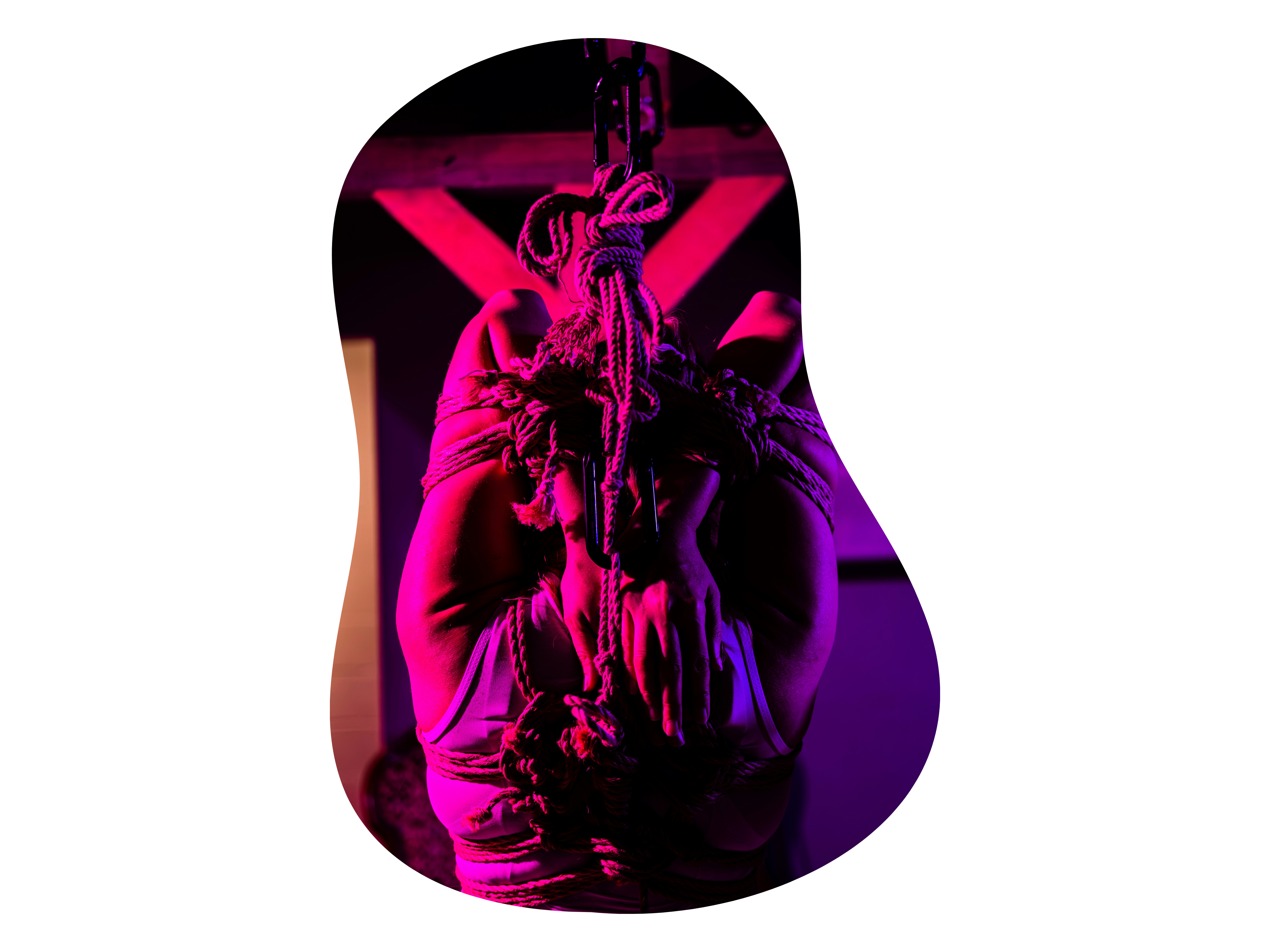
People often search for shibari because something about rope has already touched a nerve. It may be the visual beauty, the symbolism of surrender, the intimacy of being handled with precision, or the emotional charge that appears when tension, stillness, and trust all land in the same moment. But there is a major difference between learning shibari and experiencing shibari. A class teaches technique, safety protocols, body mechanics, and the craft of rope handling. An experience uses rope as part of an atmosphere or relational arc. Confusing the two creates problems for beginners because the skills and expectations are not interchangeable.
A good class is educational first. It focuses on anatomy, circulation, nerve safety, emergency cutting, tying structure, consent negotiation, and how to read a partner's body over time. A teacher is guiding people to become competent. The emotional and erotic dimensions may still be present, but they are not the primary purpose. The class exists so people can learn how to tie safely, communicate clearly, and make informed decisions. If you want to understand rope properly, that is the right place to begin. It is also the right place to go if you are curious but not yet sure what parts of rope actually attract you.
What a shibari class is for
In a class, the objective is skill acquisition. You learn names of ties, hand positions, pressure management, structure, and pacing. You learn why shortcuts can be dangerous and why aesthetic confidence without technical understanding is a real risk. Good teachers will emphasize communication just as much as knots. The person being tied is not a passive prop. They are an active participant whose breath, circulation, comfort, fear, excitement, and consent all matter. Rope without that awareness can quickly move from beautiful to reckless.
Classes also create a space to discover whether you are actually drawn to rope itself or to what rope represents. Some people love the art and the technical challenge. Others realize they are less interested in knots than in power exchange, surrender, focus, or the ceremonial quality of being held. That distinction matters. If you misread your desire, you may keep chasing more classes when what you really want is a consciously held erotic or aesthetic experience. Or you may dive into sensual environments when what you really need is technical competence first.
What a shibari experience is for
A shibari experience is about state. Rope becomes part of the container rather than the full curriculum. It may be used visually, ceremonially, erotically, or psychologically. The emphasis is on what the moment does to the nervous system and the relational field. That might mean aesthetic surrender, devotional focus, anticipation, control, vulnerability, or the charge of being seen. In that context, rope is not just a method. It is part of the language of the room.
This is where people sometimes make a false assumption. They think that if a sensual or kink-aware space includes rope, it must be a place to learn rope. Not so. A deliberately curated experience might include rope scenes as performance, ritual, or negotiated play, but it still depends on a larger container of consent, curation, and emotional intelligence. The skill being taught is not knot progression. The experience being offered is surrender, aesthetic charge, shadow, or erotic focus inside a safer environment.
Why beginners need to know the difference
If you are a beginner, knowing what you are asking for protects you. When someone types “shibari for beginners” into Google, they may need a basic rope class, a consent workshop, a kink-aware conversation with a partner, or simply a clearer sense of their own desire. If they land in a high-charge sensual environment expecting technical education, they may feel lost or unsafe. If they land in a rope lab expecting emotional intensity and ritual, they may feel underwhelmed. Neither is inherently wrong. They are just different forms of entry.
Beginners also tend to underestimate how much of rope is psychological. Rope can surface trust issues, body shame, control patterns, fear responses, and attachment themes very quickly. That is another reason to choose the right environment. A class helps you learn the mechanics with enough space to ask practical questions. An experience space asks whether you can hold the emotional and erotic meaning of the moment. Those are different muscles.
What to look for in either setting
Whether you choose a class or an experience, the first green flag is explicit consent language. You should be able to understand how the space handles negotiation, boundaries, aftercare, and stopping. In a class, that means clear safety protocols and teacher competence. In an experience environment, it means screening, facilitation, and a culture where erotic intensity is not allowed to outrun consent. The second green flag is clarity of purpose. You should know whether the space is designed for learning, performance, social exploration, ritual, or something else. The third green flag is pacing. Nobody should be pushed into deeper intensity just because they showed curiosity.
Red flags are the mirror image. Vague promises of transformation without clear structure. People performing expertise without talking about safety. Environments that glamorize surrender but cannot explain how they handle limits. Rooms where “everyone is so evolved” replaces actual consent protocols. Rope can be breathtaking. It can also be used to bypass good judgment. Strong spaces do not rely on mystique alone.
Ready to experience the room?
The Dark Temple holds space for rope aesthetics, power dynamics, and shadow work — for those who have built the foundation first.
How this relates to Open Sacred Love
Open Sacred Love is not a rope school, and that distinction matters. The more advanced end of the OSL ecosystem, especially the Dark Temple, may include rope aesthetics, power dynamics, and the energetic language that draws many people toward shibari in the first place. But the role of that space is not to teach foundational rope technique. It is to hold an advanced erotic environment where consent, screening, and ritual structure support a deeper kind of experience.
For most beginners, the right path is sequential. Learn from dedicated rope educators if technical rope is your priority. Explore the broader culture of conscious erotic environments through the Temple Nights guide. Build consent literacy and relational steadiness through spaces like the White Temple or a slower progression toward the Red Temple. If what calls you is not the knot itself but the psychological and erotic charge around surrender, then the Dark Temple may eventually make sense. The point is not to skip steps. The point is to choose the environment that matches the kind of learning or experience you are actually seeking.